Nota bene: This is not meant to be a theological treatise, rather the musings of one searching for truth.
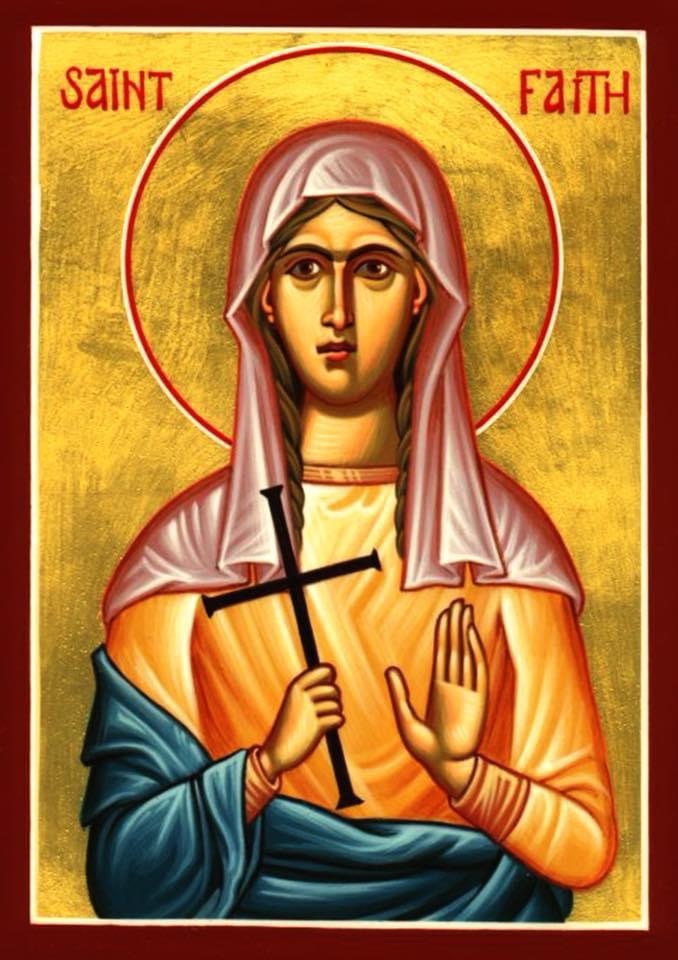
Today is the feast day of St. Sophia and her daughters Faith, Hope, and Love who were martyrs from Italy, tortured and killed by Emperor Hadrian in the Second Century. In February of 1999 I converted to the Orthodox Christian faith and chose Saint Faith as my patron. It is customary to name one’s child after a saint so when an adult converts they are often given the choice of choosing a patron. I was contemplating taking the Grand Duchess Elizabeth (sister of Tsarina Alexandra) because of the kinship I felt with her having been a former adherent to the Lutheran Church. However, right before my chrismation I learned of Sophia and her daughters and in an instant knew I wanted to take that name. In my rebellious teenage years I opened up the lock box my parents kept in their bedroom closet and skimmed through my adoption records. In them, I was referred to as ‘Baby Faith’ which I took to be a made up name by the courts. Nevertheless, I felt called to use the name at my conversion. Crazy ol’ world that this is, after meeting my birth mother five years ago, I learned that she wanted to give me “the most Christian name I could think of so I named you Faith Christiana. I had chosen wisely after all. Why I converted in the first place is another story entirely.
When I was in college I was introduced to the Orthodox Church by a Catholic friend who was also curious about this foreign-sounding religion. She was dating someone from the local seminary who was a Russophile and had visited the local parish that was under the Orthodox Church in America. At the time I did not even understand what that meant, only that the services were in English so I could follow along. Hooray! Before this, my only experience of Orthodoxy was when my father, a theologian in Berkeley, California who had friends and colleagues of all persuasions, took me to a Paschal (Easter) service at the Indian Orthodox Church. I was a little girl and all I remember was that I had to sit with the women on one side while he was on the other. It was less-than-enjoyable, I can tell you. 😅
Having grown up in the Lutheran Church in America, I remember when in 1988, we merged with the American Lutheran Church and the Association of Evangelical Lutheran Churches to form the Evangelical Lutheran Church in America. I would’ve been 14 years old at the time but I distinctly remember that merger not sitting well with me. I couldn’t articulate why until around 1995 when I visited Ss. Peter and Paul Orthodox Church in Manville, NJ. Everything became clear to me then.

When I first began my studies in church music at Westminster Choir College in Princeton, NJ I had already had a year of junior college under my belt. I had received two scholarships to attend Westminster while participating in their high school vocal camp programs in ‘91 and ‘92 but, even though I graduated from high school in ‘92 I knew that I couldn’t attend college right away. I’ve never talked about this publicly until now because of the stigma surrounding learning disabilities at the time. I had not been formally diagnosed yet but I suffered from Dyscalculia, the mathematical form of Dyslexia, and I was painfully aware that I couldn’t pass the SAT’s. My verbal comprehension was above average but my math comprehension was stunted. I had to swallow my pride and attend Diablo Valley College where I saw many of my high school classmates every day knowing I was missing out on the biggest opportunity of my life.
Fast forward to the Fall of 1995, I had two years at Westminster under my belt. I’d been swept away by the music, the church services, the taste of the professional singers’ life and it was glorious – and terribly confusing. It was the first time I had been away from my childhood church, Christ Lutheran Church in El Cerrito, California. The previous year I had attempted to visit the other churches I could walk to in the area with little success in finding a church home. I started to understand why people often fell away from the faith and church-going in general. Ugh. Who wants to get up Sunday morning to be greeted with sideways glances and mediocre hymn singing. (I was admittedly a hymn singing snob because, let’s face it, Lutherans are the pros. Anglicans a close second, she said begrudgingly. 😉)
For those first two years I tried with all my might to maintain the strong faith I had so taken for granted throughout my youth. I became very close with the director of my Sacred Music major, Steve Pilkington, a former St. Olaf grad and dyed-in-the-wool Lutheran. He spent countless hours talking me through my existential issues and what faith really boils down to. I recall sending him a card when I perceived he was particularly frazzled and simply wrote, “BE STILL AND KNOW THAT I AM GOD”. *snort* What a presumptuous little so-and-so I was! 🤣 My questions ran the gamut from, do I still take Luther’s Small Catechism at its word? What came before Luther? Are we really the body of Christ if we don’t all believe the same things? Dr. Leaver (my beloved Liturgical Theology professor) showed us a video of a Vespers service performed by some monks at a monastery in Upstate NY. What’s that all about?! Where’d they come from?! I confessed to him my misgivings about Protestantism in general, namely, WHY ARE THERE FIFTY MILLION DIFFERENT CHURCHES?!?! Why are we so divided? Isn’t there “One Bread, One Body” as the song goes?!


During the two year lull away from my childhood church I became enamored with the Anglican/Episcopal traditions. I had always been a lover of a beautifully executed church service so, I mean, you want perfection? You go to the masters. As a “straight tone” soprano I had a highly sought after voice because I could mimic their boy sopranos. In fact, even before going to Westminster I had a deep and abiding love affair with boy choirs. Wait. That came out wrong. 😅 I went to as many boy choir concerts as I could in California including but not limited to the boy choir of Grace Cathedral, San Francisco, the Drakensberg Boy Choir, the Vienna Boys’ Choir, the crème de la crème the King’s College Choir from Cambridge. These choirs served as my gateway drug to studying Early Music performance with Julianne Baird. This began my fascination with all things ancient. The older, the better.
I remember when I learned that the first notated hymn was called Phos Hilaron, or Gladsome Light. It automatically struck a chord with me. Such hymnody existed back at the church’s infancy?! Inconceivable! Imagine my surprise when I discovered that it’s still sung at every Vespers service to this day! Gobsmacked.
During my first few years of college I sang anywhere that would pay me but in solid ADHD fashion I went wherever the money took me. I had a stint at an Episcopal church called St. Luke and the Epiphany. All the smells and bells but not quite at the same lofty heights as St. Clement’s down the road. They served such masterful services that God Himself would not have felt worthy of attending. Still the experience was transformative in that I began to realize that the most exquisitely crafted services can be without soul and substance if they become performative. In short, the pageantry felt empty. Beauty for beauty’s sake. Where was Christ on the cross? Where was the suffering servant. Where was the devastating Passion and the triumphant Resurrection? I wasn’t sure but I just wasn’t feeling much of anything at my various church jobs. It was nothing against those churches. It never was. But I think we as humans have an intuitive sense of the divine when we encounter it.
And I finally did that fateful day in late August. I had just returned from seeing my family in California and was moving back in with the Evangelical ladies I lived with in a giant house on Nassau Street in Princeton. My friend, N, who is now an Antiochian priest’s wife in Florida, said she had been to the most life-changing service she’d ever been to, and would I like to come? I said sure because back then I was game for almost anything. Ahh youth! Her friend, B, who is now a priest in Texas was going with some buddies from Princeton Seminary and said I could tag along. The service we attended was the Vespers for the Beheading of Saint John the Baptist which I had no idea is something people would celebrate. Like, uhhhh ok. If you say so… 😳
The service itself wasn’t anything jaw-dropping. Rather it was the peaceful simplicity and routine-ness of it that first hit me in the gut. Everything was foreign to me but, but what? Also vaguely familiar somehow? The flow of litanies, to hymns about the commemorations of the day, the connection with the ancient worship of my forefathers. The PHOS HILARON! I think I cried at that point. I had no idea that the entire service was sung or chanted. The entire thing! No talking. Only voices lifted in prayers sung since time immemorial. There was no sense of pretense merely a kind of solemn adherence to prayer. There was a sacredness I had never witnessed before. I remember as a young person crossing myself at one point during a Sunday morning service at my Lutheran church and surprising myself because that’s just not really a Lutheran thing to do. I recall immediately after doing it feeling like, that felt right but why? Was I just a weirdo who needed to move my body due to some ADHD need to wiggle? Did I want people to look at me and say, ah, there’s a girl who takes herself very seriously? No, I think I saw someone do it at some point and in the back of my mind I instinctively knew it was like putting and period at the end of a sentence. Your stamp of ‘amen’, so be it, to whatever the pastor was proclaiming. I kept doing it anyway and continued on through my early days visiting the Orthodox Churches nearby.
In the coming months I attended every service I could and stopped getting paid to sing as much as I was able. I somehow knew I needed this in my life. It was still foreign but I felt like I could finally worship. I simply attended services and listened, watched and absorbed. I never knew that Mary was referred to as the Mother of God, Theotokos. I hadn’t really given her much thought at all and somehow now I felt sad that I hadn’t realized she gave birth to not just Christ but, since He is fully God and fully man she truly bore God in her womb. Mind boggling. She literally gave us the ultimate gift! Best human EVER!
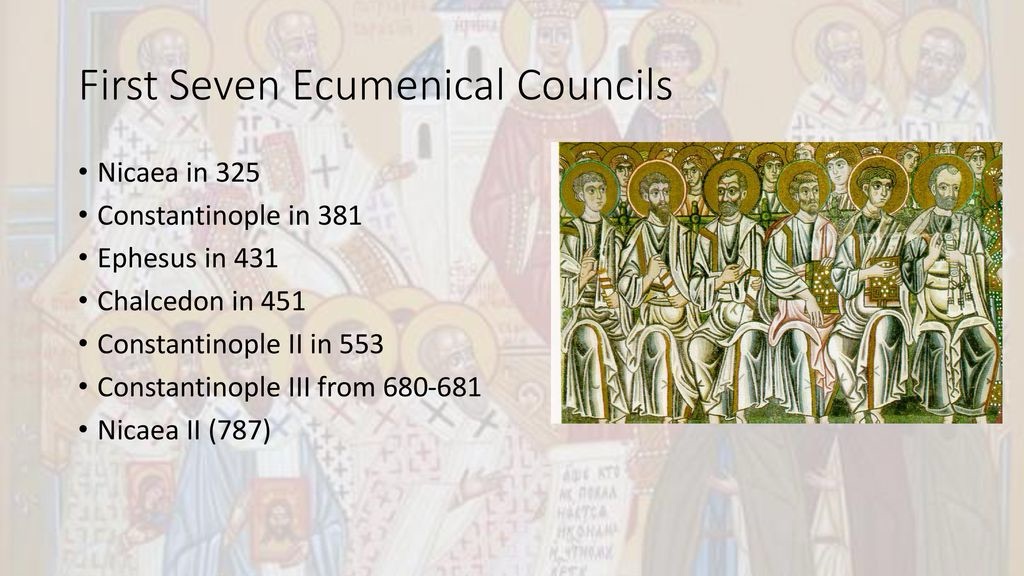
I learned of the continuous, unbroken line of bishops, priests, saints – both female and male tracing their spiritual pedigrees to the Apostles and Christ Himself. I learned of the Holy Councils where the sharpest and most spiritually astute theologians conciliarly hashed out what the faith was and perhaps, more dramatically, what it wasn’t. I went through a couple months of feeling intense sadness that we fallible humans caused a Great Schism that echoes even now in modernity. Most importantly, though, I learned that it matters where you hang your spiritual hat.
If, as we read in the Bible, Jesus Christ established His Chuch while on Earth and the Holy Spirit descended on the Apostles at Pentecost, doesn’t it stand to reason that He intended for us to be of one mind, one faith? The faith preached by the apostles can be continuously traced to one community of believers, the Orthodox. The first and greatest (read, worst) schism being the Western half of Christendom parting ways with the East in 1054. Up until that time the conciliar nature of the faith – the lack of one central figurehead – and instead, a culture of Ecumenical Councils wherein no one person was ever given authority to speak for the people of Christ. They spoke as a group. The things our modern Christian churches take for granted are woven inextricably into the fibers of Eastern Orthodoxy. The Nicene Creed and our understanding of why the Eucharist matters, for example. These weren’t arbitrary rules or statements some dudes made up over beers and stogies. This was years of painstaking, often contentious arguing and prayer to weed out the heresy. We only now know it’s heresy because the faithful of the early church declared it so as a group of prayerful believers.
So where did that leave me? Is there a True Church? And, if so, does it matter? That’s up for debate amongst many people in my life but the answer for me was, emphatically, YES! It matters. We regularly pray for unity amongst all Christians and I believe it has to be literal. I don’t think for one second that Christ didn’t mean He established his Church to be governed by whoever made the best argument. My own father, who is a much-beloved and respected Lutheran theologian said it best. After I presented my own argument for conversion on a drive from Lake George, New York to Princeton, he simply said, “Well Biz, if that’s where you’re finding Christ, that’s where you should be.”
It’s been 29 years since I first set foot in an Orthodox Church. By all accounts I should have been on to the umpteenth passing fancy but for reasons beyond my comprehension my heart has remained faithful to Christ and His Church. I still don’t know what I’m doing. I don’t think that’s the point, though. As a sweet, unassuming old lady once said to me, “I’ve been Orthodox now for ten years and I still know nothing but you keep learning.” Her name was Audrey (Marina) Haitch. She converted at around 65 years old and had been a copy editor for the New York Times. If this incredible dynamo was still an infant in the church at her death ten years later I can only pray that the Holy Spirit gives me an ounce of her faith.
To my birth mother who blessed me with the most Christian name possible, I honor your sacrifice and give thanks for the ultimate gift of life. To my parents, Ted and Jenny Peters, I honor you for making me your own and instilling in me a lifelong love of Jesus Christ.
Love, Elizabeth Anne (Peters) Frase
(Faith Christiana Button)

 Faithfully Frazzled
Leave a comment